Nutrition for Sick Cats: When Appetite Disappears and Weight Drops
A cat that won't eat is a medical emergency. Not "let's wait and see." Emergency. I've seen cats die from hepatic lipidosis because their owners waited 48 hours before seeking help. By then, the liver was already failing. Don't let that be your cat. This article is for when your cat is already sick — not for weight loss, but for survival. The rules are different here. The timeline is shorter. And the margin for error is zero.
The 24-Hour Rule: When to Panic (And When Not To)
A healthy cat can skip one meal without immediate danger. But if your cat refuses food for 24 consecutive hours, call your vet. If they refuse for 48 hours, that's an emergency — go to the ER. Kittens and senior cats have less margin. For cats under 6 months or over 10 years, 12 hours without food warrants a vet call. For cats who are already underweight or have underlying conditions (kidney disease, diabetes, hyperthyroidism), don't wait at all — call at the first missed meal.
The biggest risk isn't starvation. It's hepatic lipidosis. When a cat doesn't eat, their body mobilizes fat stores. Fat floods the liver. The liver can't process it fast enough. Fat accumulates. Liver function fails. It can happen in as little as 48-72 hours in an overweight cat — exactly the cat who most needs to lose weight but can't afford to stop eating.
Why Sick Cats Stop Eating (And What the Vet Will Do)
Cats stop eating for many reasons: dental pain, nausea (from kidney disease or pancreatitis), stress, medication side effects, or underlying disease like cancer or infection. The first step is diagnosing the cause — not force-feeding. Your vet may recommend: Anti-nausea medication (an anti-nausea medication, an anti-nausea medication). Appetite stimulants (an appetite stimulant, an appetite stimulant). Pain relief (for dental or arthritis pain). IV fluids (to correct dehydration). Hospitalization with feeding tube (if anorexia persists).
Yes, feeding tubes sound scary. They're not. A nasogastric or esophagostomy tube can be placed with mild sedation. Owners can feed through it at home. It saves lives. I've seen cats bounce back from the brink of liver failure because their owners agreed to a temporary feeding tube.
At-Home Strategies to Encourage Eating
While you're waiting for the vet appointment or after they've ruled out emergencies, here's what might help. These are temporary measures — not long-term solutions. Wet food only, warmed slightly. Microwave for 5-10 seconds (stir, test temperature). Warmth releases aroma. Most cats prefer food at mouse-body temperature — around 100°F. Try different textures and flavors. Pâté vs. shreds vs. chunks. Chicken vs. fish vs. turkey. Sometimes a texture change makes all the difference. Add strong-smelling toppers. Tuna water (not oil), low-sodium chicken broth (no onion/garlic), freeze-dried chicken powder, or a sprinkle of parmesan cheese. The goal is aroma, not nutrition — even a few bites are progress. Hand-feed. Some cats will eat from your finger when they won't touch a bowl. Offer small amounts frequently — a teaspoon every hour. Reduce stress. Move food to a quiet, low-traffic area. Keep other pets away. Use a low-sided dish if whiskers are sensitive (some cats have "whisker fatigue").
When to Use a Syringe (And When Not To)
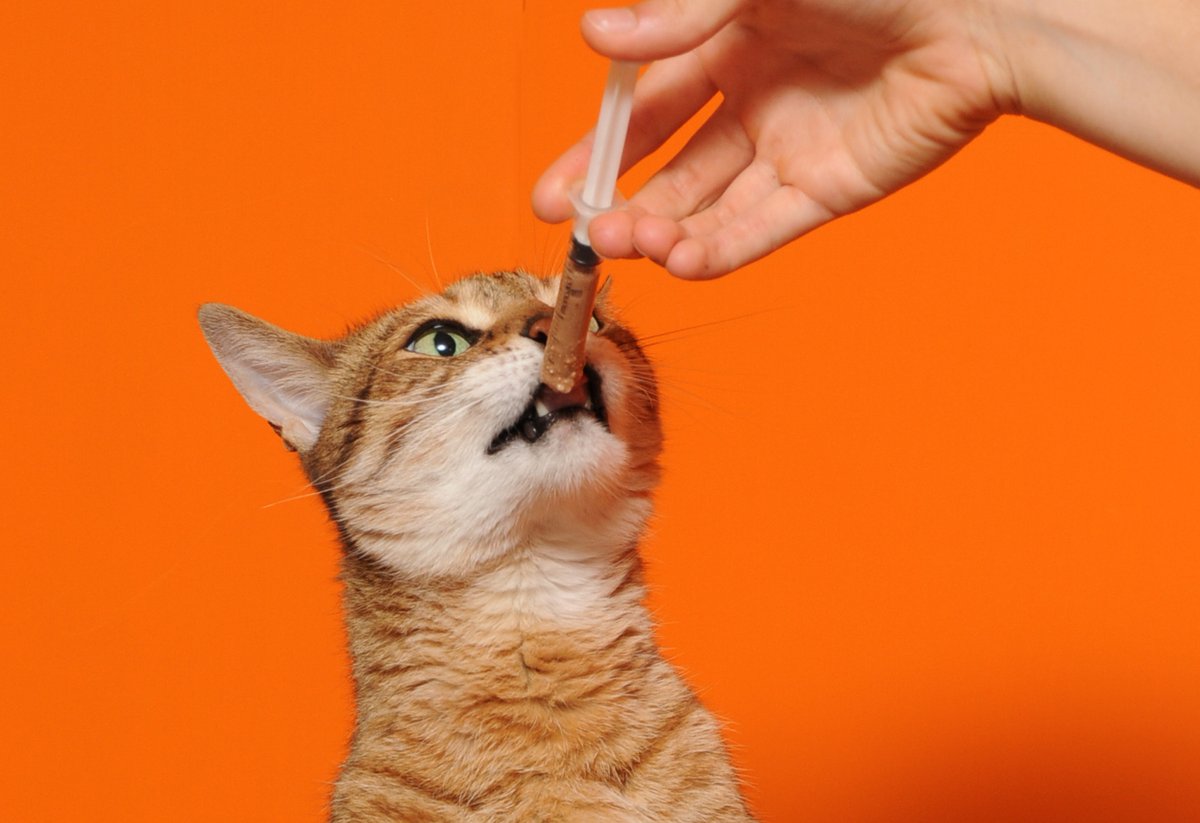
Syringe feeding (pushing liquefied food into the cheek pouch with a large syringe) is controversial. It works for some cats. For others, it creates food aversion and stress. Only syringe-feed if: Your vet has cleared it, you have a suitable recovery food (like a prescription recovery diet or a prescription recovery diet), and your cat is alert enough to swallow safely. Never syringe-feed a cat who is unconscious, seizing, or having trouble breathing — they can aspirate. Never syringe-feed if: The cat is fighting it hard. Forcing food creates negative associations and can make long-term refusal worse.
If you must syringe-feed, aim for small volumes: 5-10 ml per session, every 2-4 hours. Go slow. Insert the syringe at the corner of the mouth, aiming toward the cheek, not the throat. Let the cat swallow between squirts.
I had a client — I'll call her Lisa — with a 14-year-old cat named Toby. Toby had chronic kidney disease and stopped eating. Lisa waited 3 days, thinking "he'll eat when he's hungry." By the time she brought him in, his kidney values had doubled and he had early hepatic lipidosis. Toby spent 5 days in the hospital with a feeding tube. He recovered. But Lisa spent $3,500 she didn't have. "I thought I was being patient," she said. "I was being dangerous."
Time is not on your side. Their bodies are small. Their livers are sensitive. Waiting 24 hours is reasonable. Waiting 48 hours is risky. Waiting longer is gambling with their life. If your cat misses two consecutive meals, call your vet. Not tomorrow. Not after one more meal. Today. Keep emergency numbers on your fridge. Have a plan. And if your cat has a chronic condition, discuss appetite stimulants in advance — so you have them at home when you need them. Luna had a dental infection last year. She stopped eating. I called my vet within 12 hours. We started antibiotics and an appetite stimulant. She was eating again within 24 hours. No hospital. No feeding tube. Just prompt action. Be like that. Don't wait. Waiting is how cats die.

Olivia Brennan
Certified Veterinary Nutritionist with 8 years of clinical experience. Creator of Cat Calorie Tool. Based in Portland, Oregon with two rescue cats: Milo and Luna.